1. The Trend Report
Same Product, Opposite Businesses
Soho House just agreed to a $2.7 billion take-private deal, backed by MCR Hotels and Ashton Kutcher, four years after it listed on the New York Stock Exchange. Across town, 5 Hertford Street, arguably the harder club in London to get into at all, charges its members £1,800 a year, less than half what Soho House charges for its own top tier.
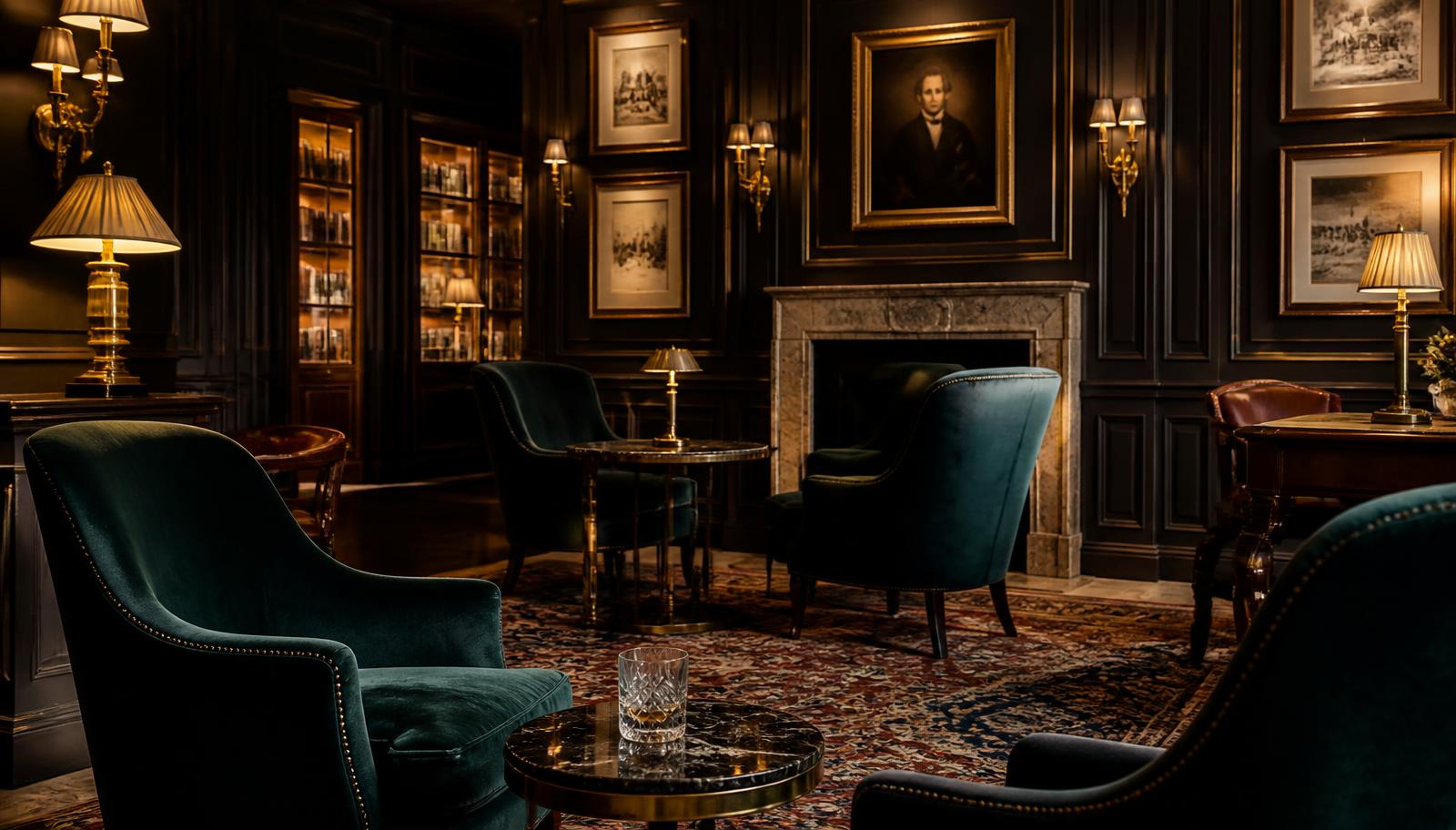
Neither club has a court, a course, or a gym worth mentioning until very recently. Both sell access to a room. They have built almost opposite businesses around exactly the same product.
Soho House now runs 46 Houses across 19 countries with more than 270,000 members. Third quarter 2025 revenue hit $370.8 million, up 11.2% year on year, with membership income alone growing 14.3% to $122.7 million. By any normal reading those are strong numbers for a hospitality business. The company still lost $118 million in 2023, its last full year of public reporting before the take-private deal, on revenue of $1.14 billion. Growth and profitability have not been the same story at Soho House for years, and the take-private move is partly an admission that fixing that gap needs patience public markets were not giving it.
A low membership fee at a club this hard to join isn't the business. It's the gatekeeping mechanism.
2. The Numbers
35%
Membership fees as a share of Soho House revenue. In-house spend on food, drink, rooms and events accounts for 40%, with the rest split across smaller ventures like Soho Home.
Scale
46 Houses across 19 countries, serving more than 270,000 members.
Q3 2025 revenue
$370.8 million, up 11.2% year on year, with membership income up 14.3% to $122.7 million.
The profit gap
A $118 million loss in 2023 on $1.14 billion of revenue, the last full year of public reporting before the deal.
The operating burden
A 40% in-house revenue share means running dozens of restaurants and hotels well across 19 countries just to make the membership fee worth paying.
The other model
5 Hertford Street was built in 2012 with £30 million of Robin Birley's own money, and charges roughly £1,800 to £3,000 a year depending on tier.
Where the money is made
Loulou's, the basement nightclub, plus food and drink spend from members already inside, at a fraction of Soho House's scale and complexity.
3. The Business Model / Opportunity
The Tiny Version, and Why the Fee Stays Deliberately Low
Robin Birley built 5 Hertford Street in 2012 with £30 million of his own money and a strict door policy inherited from his father, Mark Birley, the man behind Annabel's. The membership fee has stayed around £1,800 to £3,000 depending on tier, genuinely modest next to what comparable clubs charge, and that is not an accident or a bargain. A low membership fee at a club this hard to join is not the business. It is the gatekeeping mechanism, a small enough number that money was never really the barrier, discretion and connection were.
The club's actual commercial engine runs through the basement nightclub, Loulou's, and the food and drink members spend on once they are already inside, the same in-house-spend logic Soho House runs, just at a fraction of the scale and with none of the multi-country operating complexity. 5 Hertford Street has reportedly turned a real, sustainable profit for years running exactly this way: small membership, tight cost base, high spend per head, none of the pressure of servicing hundreds of thousands of members across multiple continents.
Neither club would describe itself as selling real estate, food, or even hospitality, and both would be right. What they are selling is curated proximity. Soho House's screening explicitly favours creative credibility over net worth, a genuine point of difference from old-money London clubs, while 5 Hertford Street's unmarked door and proposer-and-seconder entry system exists purely to guarantee everyone in the room already belongs there. Reported meetings at 5 Hertford Street have included pre-Brexit political strategy sessions and diplomatic lunches, the kind of access no amount of amenity spending can manufacture on its own.
Operator Takeaway: Soho House's scale is also its structural weakness. Maintaining genuine exclusivity gets harder every time you open a new House, and 270,000 members is a very different promise than the tightly gated few thousand at 5 Hertford Street or Oswald's.
4. Quick Hits
The buyers
MCR Hotels and Ashton Kutcher are backing the $2.7 billion take-private, ending four years of Soho House life on the NYSE.
Membership growth still works
Membership income grew 14.3% year on year in Q3 2025, faster than total revenue. Demand has never been the problem.
The Birley restraint
Robin Birley has never chased Soho House's growth, and the numbers suggest that restraint is exactly why his clubs stay profitable.
Screening as strategy
Soho House selects on creative credibility rather than net worth. 5 Hertford Street uses a proposer and seconder. Both are product decisions, not admin.
Sport is optional
Neither club leaned on courts, courses or gyms to build its membership. The room was always the amenity.
5. The Takeaway
The One Scaling Limit a Gym Never Faces
A club selling exclusivity has one genuine scaling limit that a gym or a golf course never faces: the product gets worse the more people can access it.
Soho House is still working out how to grow past that limit. 5 Hertford Street simply decided not to try.